In this guide
- The Rise of Micro-Living & High-Efficiency Interiors in 2026
- Essential Space-Saving Furniture Innovations
- Invisible Tech Integration: Power, Lighting & Acoustics
- Spatial Zoning Strategies for Studio Apartments
- Material & Color Psychology to Visually Expand Compact Rooms
- Smart Sizing & Ergonomics: Before You Buy
- Frequently Asked Questions (FAQ)
- Conclusion
The global architectural landscape has shifted dramatically toward high-density urban living. As square footage premiums rise across major metropolitan hubs, homeowners and renters face a common challenge: optimizing limited interior footprints without sacrificing comfort, functionality, or aesthetic elegance. Adopting smart multifunctional furniture for small spaces is no longer merely a temporary trend; it has become an essential strategy for modern living. Today's dynamic interiors require versatile solutions that seamlessly transition between work, rest, dining, and recreation, transforming micro-living environments into high-performance homes.
The Rise of Micro-Living & High-Efficiency Interiors in 2026
Urbanization trends in 2026 show a significant shift toward smaller residential spaces, driven by population density, shifting demographics, and rising property values. However, small-space living no longer implies compromise. The modern micro-apartment relies on high-efficiency interior architecture where every square meter serves multiple purposes throughout the day.
Urbanization and the Shrinking Residential Footprint
Metropolitan developments increasingly feature studio and micro-one-bedroom floor plans. Designers are challenged to create layout strategies that deliver full functionality within footprints under 400 square feet. This shift requires moving away from static furniture arrangements toward dynamic environments that evolve to meet shifting daily needs.
The Shift from Static Decor to Dynamic, Adaptable Environments
Traditional interior design relied on fixed furniture arrangements, allocating dedicated rooms for single functions like dining, sleeping, or working. Modern living demands adaptable layouts where space transitions smoothly throughout the day. A living room must function as a professional workspace by morning, a dining area by evening, and a peaceful bedroom by night. Smart interior engineering makes these transitions effortless.
Essential Space-Saving Furniture Innovations
Recent developments in mechanical engineering and materials science have introduced advanced furniture concepts designed for compact spaces. These solutions combine structural stability with effortless operational mechanisms.
| Furniture Category | Key Features | Primary Utility | Space Efficiency Gain |
|---|---|---|---|
| Motorized Murphy Beds | Automated descent, integrated desks, auto-leveling shelves | Dual-purpose sleeping & home office setup | Up to 75 sq. ft saved |
| Extendable Dining Consoles | Telescopic aluminum tracks, internal leaf storage | Converts from 18" entry console to 10-person table | 85% footprint reduction when stowed |
| Smart Storage Ottomans | Modular inner dividers, hydraulic lift-top surfaces | Seating, footrest, coffee table, hidden storage | Combines 4 functions in 1 footprint |
| Modular Wall Shelving | Track-mounted components, integrated desk flaps | Vertical storage, customizable display, workstation | Zero floor space utilization |
Motorized Murphy Beds with Integrated Desks
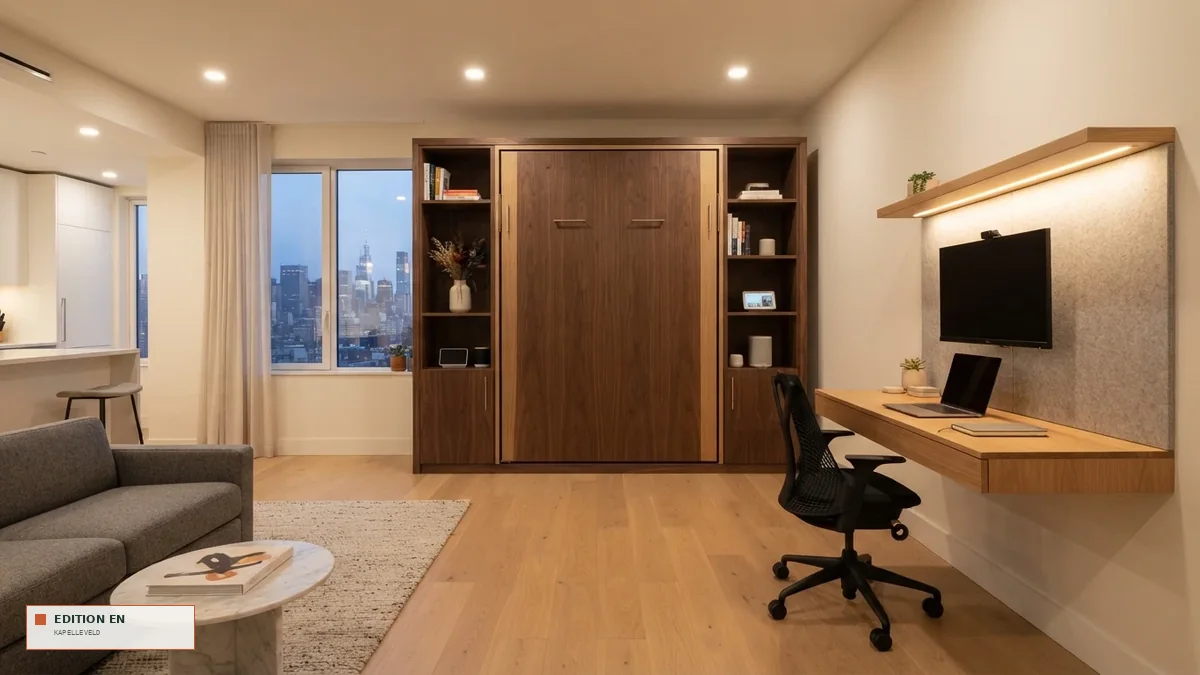
Contemporary wall beds have evolved significantly beyond heavy, manual pull-down systems. Modern motorized Murphy beds use quiet linear actuators operated via smartphone apps, voice commands, or discrete touch sensors.
These systems feature self-leveling desk attachments that remain parallel to the floor during deployment. Items on the desk stay securely in place when the bed lowers, eliminating the need to clear your workspace at night.
Extendable Dining Consoles
Space-saving dining solutions have advanced through high-precision engineering. Modern extendable consoles function as slim hallway accent tables just 18 inches deep. Built with heavy-duty aluminum telescopic rails, these tables easily expand to seat up to ten adults, providing durable and stable support for everyday dining or host gatherings.
Multi-Functional Storage Ottomans and Modular Wall Shelving
Upholstered ottomans now feature hydraulic lift tops that transform into stable laptop desks or casual dining trays, while revealing hidden storage compartments inside. Concurrently, modular wall-track shelving systems take advantage of vertical wall space. These systems allow users to easily reconfigure shelving, hanging storage, and drop-down desks as their functional needs change.
Invisible Tech Integration: Power, Lighting & Acoustics
Modern functional furniture seamlessly integrates essential utility technology directly into its structural components, eliminating visible cables and electronic clutter.
Wireless Charging and Hidden Cable Management
Leading manufacturers embed Qi2 wireless charging pads directly beneath natural wood veneers and composite surfaces, marked only by subtle laser-etched indicators. Power distribution systems are integrated into table legs and sofa frames, featuring flexible internal conduits that safely manage power lines during furniture movement.
Circadian LED Lighting Systems
Integrated lighting systems do more than illuminate space—they support physical well-being. Built-in LED channels deliver circadian lighting cycles, shifting from crisp, cool light that boosts morning productivity to warm, low-intensity light in the evening to encourage restful sleep.
Acoustic Dampening Materials in Convertible Furniture
With remote work now standard, managing sound in compact spaces is essential. Modern furniture uses sound-absorbing acoustic felts, micro-perforated wood veneers, and dense eco-foam cores. These materials reduce echo and improve room acoustics, turning open micro-studios into comfortable spaces for clear voice calls and focused work.
Spatial Zoning Strategies for Studio Apartments
Living comfortably in a small footprint requires clear spatial organization to keep your home feeling structured and open.
Visual and Physical Division Techniques
Open-plan studios benefit from smart division strategies that define specific activity zones without building permanent walls.
- Double-Sided Shelving Units: Open-back bookcase partitions create clear boundaries between sleeping and living areas while preserving natural light and air flow.
- Ceiling-Mounted Track Curtains: High-density acoustic drapes can be drawn to screen off sleeping quarters, offering instant visual privacy and sound control.
- Sliding Glass Panels: Semi-opaque or fluted glass doors define separate rooms while allowing light to filter through the entire floor plan.
Creating Flexible Multi-Zone Layouts
Flexible furniture arrangements allow a single room to serve multiple purposes cleanly throughout the day. By choosing pieces designed for easy repositioning, you can quickly convert a home office into a comfortable evening living room, keeping your space adaptable and functional.
Material & Color Psychology to Visually Expand Compact Rooms
The visual weight and tactile finish of your furniture strongly influence how large and open a small room feels.
LIGHT COLOR PALETTE + REFLECTIVE SURFACES = EXPANDED VISUAL SPACE
Color Palettes for High-Perception Space Expansion
Monochromatic and tone-on-tone color palettes reduce visual noise in compact interiors. Soft neutrals, pale warm grays, off-whites, and muted sage green reflect ambient light, softening boundaries and making walls appear further away. Matching furniture colors to your walls creates a cohesive, streamlined look that maximizes open space.
Reflective Surfaces and Light-Weight Materials
Incorporating translucent elements—such as acrylic dining chairs, tempered glass table tops, and slim metal frames—allows light to pass through furniture smoothly. Satin-finish lacquers and strategically placed mirrors reflect both natural and artificial light, adding visual depth to cozy spaces.
Smart Sizing & Ergonomics: Before You Buy
Purchasing scale-appropriate furniture requires careful planning, precise structural verification, and attention to movement paths.
Measuring Clearances and Traffic Flow
Always measure both folded and fully expanded dimensions before making a purchase. Maintain a clear main walkway of at least 36 inches throughout your floor plan. Ensure transformed furniture setups preserve at least 24 inches of clearance around open walkways so movement remains smooth and unobstructed.
Load Capacities and Structural Fastening Requirements
Heavy-duty transformable items, such as wall-anchored Murphy beds and cantilevered tables, need secure installation. Verify that your walls contain structural studs or masonry anchors rated for high dynamic loads. Check weight ratings carefully to ensure the furniture safely supports daily use over time.
Frequently Asked Questions (FAQ)
What is the most effective piece of furniture for a small studio apartment?
A motorized wall bed featuring an integrated desk offers the best overall space savings. It combines a high-quality daily sleeping surface with a dedicated work area, freeing up roughly 50 to 75 square feet of usable floor space during peak daytime hours.
Are smart motorized furniture systems reliable over long periods?
Yes, high-end smart furniture systems use commercial-grade linear actuators, heavy-duty steel tracks, and manual override capabilities. Look for models rated for at least 10,000 full operational cycles, backed by comprehensive manufacturer warranties.
How do invisible tech features receive power inside moving furniture?
Moving smart furniture uses integrated cable management tracks, flexible drag chains, or internal slip-ring connectors. These designs keep power cables protected from pinching, stretching, or wearing out during daily movement.
Can compact multifunctional furniture increase property or rental values?
Yes. Micro-apartments equipped with built-in, high-performance multifunctional furniture typically achieve higher rental yields and attract long-term tenants. Buyers appreciate moving into optimized, move-in-ready homes that make full use of every square foot.
Conclusion
Smart multifunctional furniture offers a thoughtful, engineering-led approach to modern urban living. By combining space-saving mechanics, hidden technology, smart layout choices, and precise measurements, you can transform even compact floor plans into spacious, highly functional homes. Modern interior design isn't defined by square footage, but by how intelligently you use the space you have.
Read this guide in five editions
Smart Multifunctional Furniture for Small Spaces: The Complete 2026 Urban Living Guide
The same field notes, translated and adapted for each market.
Warm Minimalism & Earthy Kitchen Renovation Trends: How to Create a Timeless Home in 2026
Biophilic & Sustainable Modular Furniture Trends Transforming Modern Homes in 2026
Commercial HVAC Design, Controls & Maintenance: A Field Guide to Efficient Buildings
Structural Kitchen Renovation: Beams, Load Paths, and the Sequence That Keeps a House Standing